FTIR unmixing
Collaborators
This is a collaboration with:
- Francisco Mederos-Henry (KIK-IRPA & Université Libre de Bruxelles)
- Shivam Pande (postdoc researcher, UGent)
Results
Description
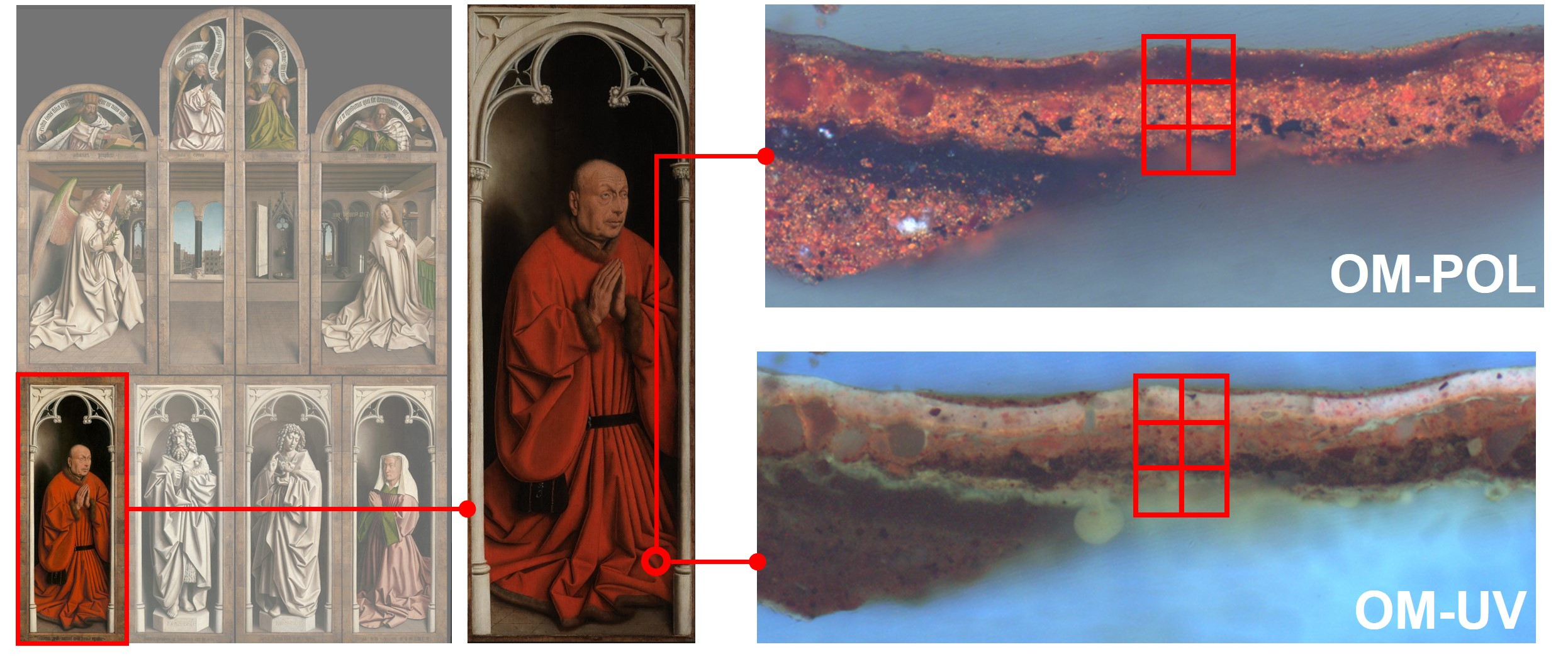
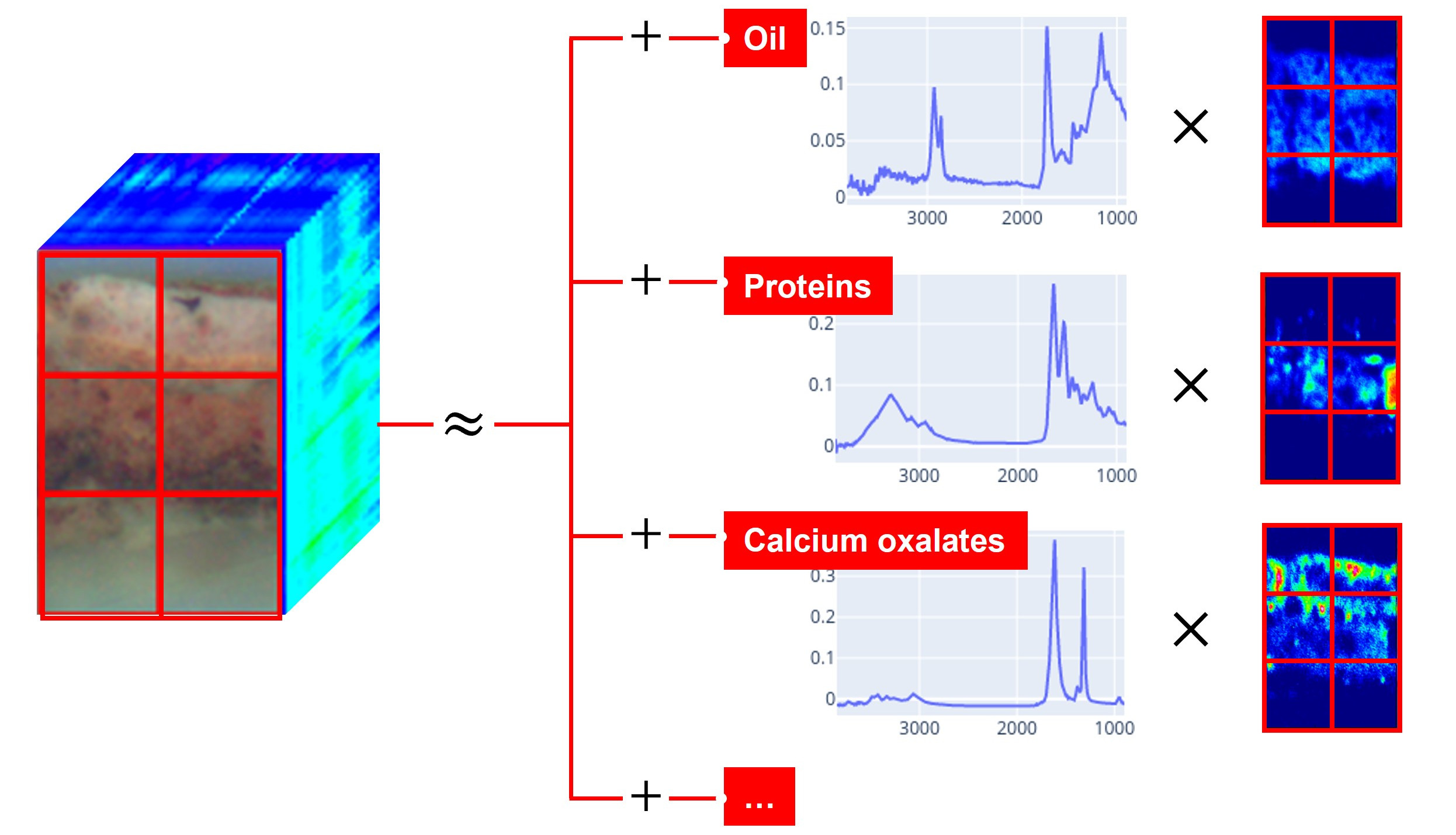
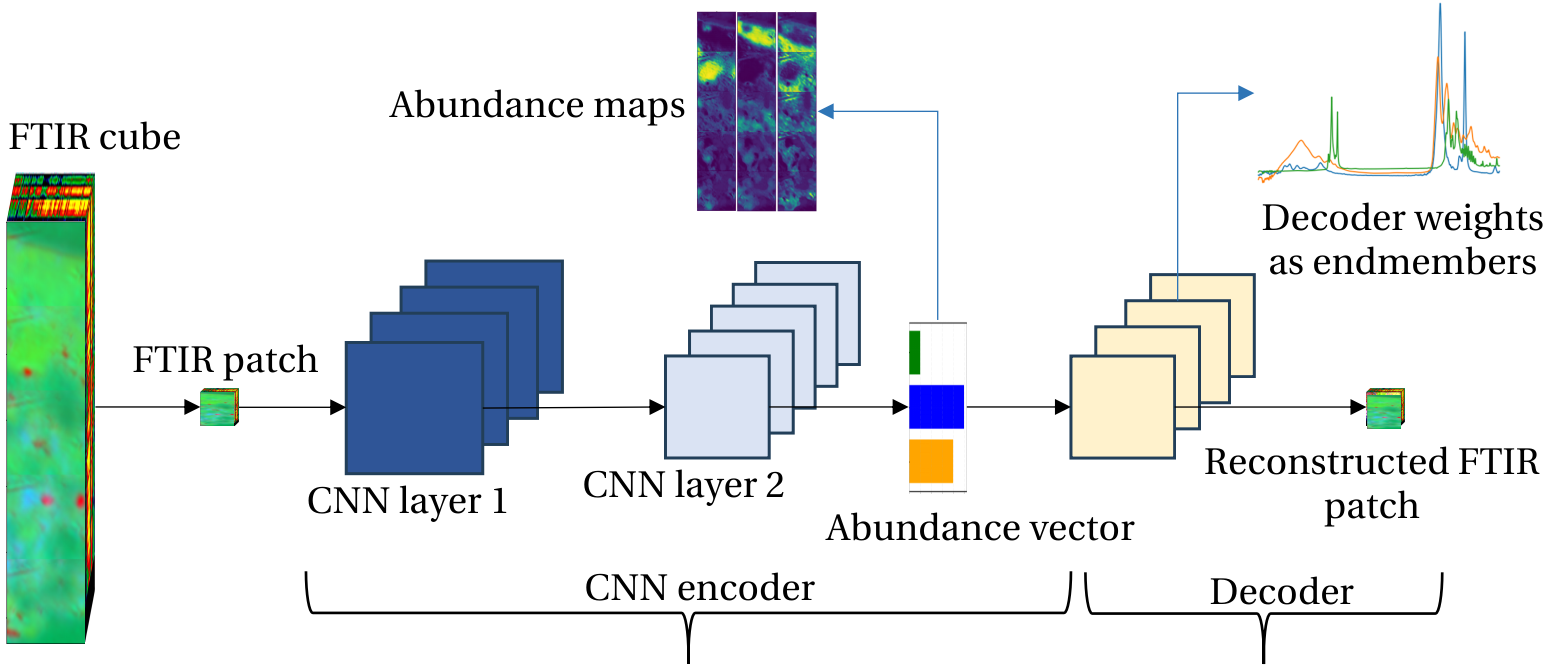
Infrared spectroscopic imaging is a powerful non-invasive technique used in heritage science to characterize the materials present in artworks. When applied to microscopic cross-sections of historical paintings, it produces a hyperspectral image where each pixel carries a full infrared spectrum reflecting the local chemical composition, revealing pigments, binders, varnishes, and degradation products layer by layer. Interpreting these data is challenging: pixel spectra are rarely pure, as they typically result from the superposition of several materials, and current practice still relies heavily on manual comparison with reference libraries, which is slow and hard to scale. This direction investigates how to automate the decomposition of such spectroscopic images into their constituent materials and their spatial distributions, with applications to the analysis of historical artworks such as the Ghent Altarpiece.